June 20, 2025
Which Are Current Trends in Entrepreneurship? Key Insights and Examples
The following section examines essential findings together with concrete illustrations of modern entrepreneurial developments that influence contemporary market dynamics.

Overview
The modern entrepreneurial environment shows digital platform expansion together with sustainable business approaches and social entrepreneurship practices and technological AI advancements for operational enhancement. These market trends show how consumer preferences and market requirements continue to evolve. The competitive market demands entrepreneurs to develop sustainable startups and technological solutions for success. These trends reveal both market direction and growth potential. Entrepreneurs who adapt to these changes can use them to deliver effective solutions for consumers which leads to venture resilience and success.
Introduction
The modern entrepreneurial landscape experiences major transformations because of technological advancements and increasing sustainability issues. Modern entrepreneurs use digital platforms and e-commerce to access worldwide markets while integrating social responsibility into their business operations. The market pressures and changing consumer expectations require this transformation.
Business leaders who want to succeed in today's competitive market must learn to handle these evolving trends. The understanding of current market dynamics enables them to establish strategic positions for success in this new entrepreneurial era.
Defining Current Trends in Entrepreneurship
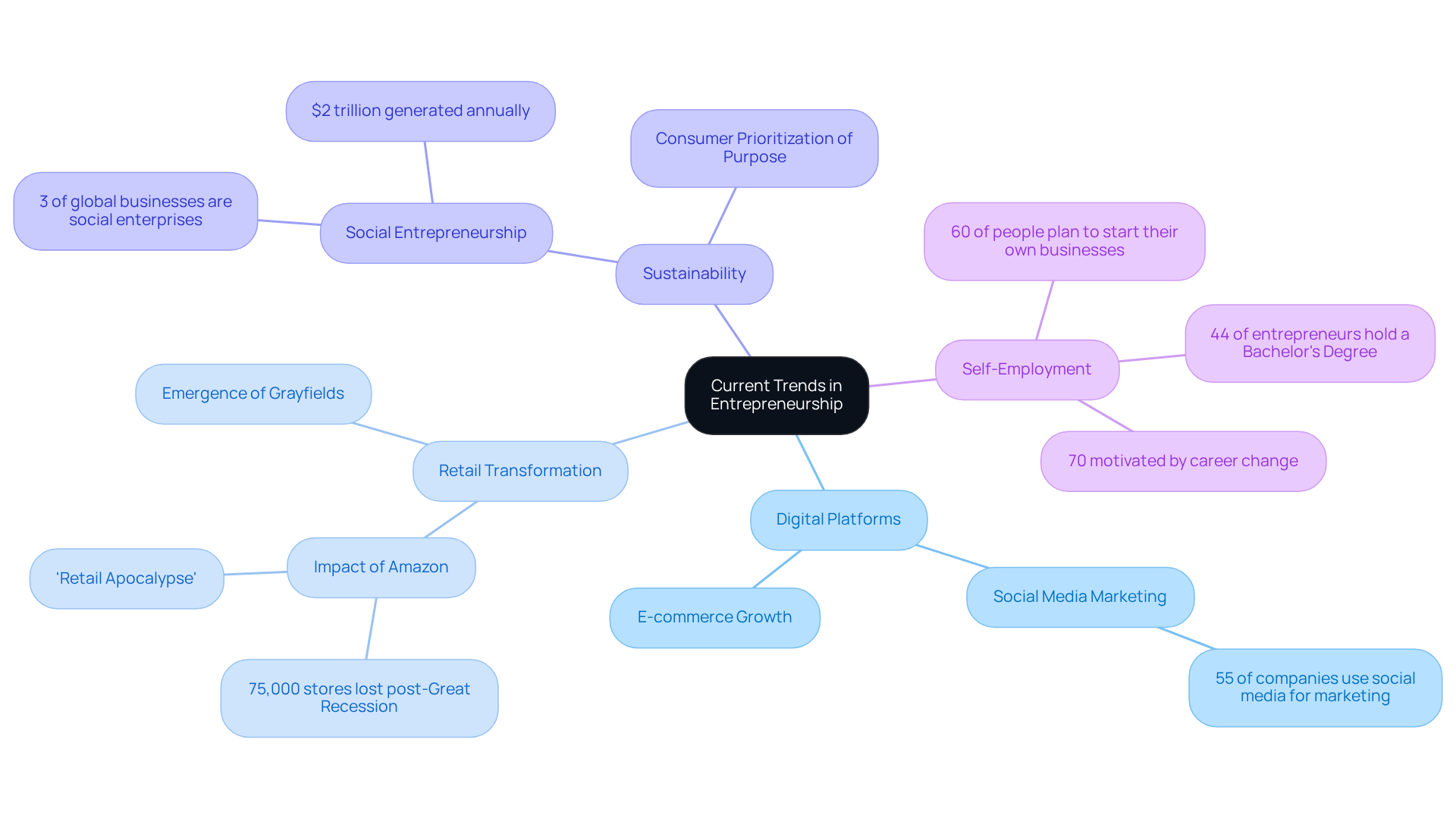
Modern entrepreneurship displays the dynamic operational and strategic patterns which define present-day entrepreneurial development patterns. Digital platforms and e-commerce operate as major entrepreneurship trends which transform traditional business operations. The current business environment provides entrepreneurs with better access to international markets than ever before and 55% of companies use social media for marketing because it provides affordable and accessible marketing opportunities.
The retail industry underwent a complete transformation through Amazon's operations which experts describe as the 'Retail Apocalypse.' The North American retail sector lost more than 75,000 stores after the Great Recession began because Amazon expanded its market reach. The company gained market leadership through its technological and logistical approach which resulted in abandoned shopping malls and stores that became known as 'grayfields.' Entrepreneurs need to innovate continuously because dominant market players generate intense market pressures that they must counter.
The rising social and environmental awareness of new business leaders has made sustainability and social entrepreneurship essential trends in entrepreneurship. Social enterprises now represent 3% of global businesses which generate $2 trillion annually through their creation of 200 million employment opportunities. The trend shows that consumers now prioritize purpose over profit to match their expectations regarding ethical practices.
The entrepreneurial environment continues to evolve because 60% of people plan to start their own businesses which indicates a wider cultural movement toward self-employment during 2025. Business owners who obtained their education at the Bachelor's level made up 44% of the total while Master's degree holders comprised 27% of the group thus demonstrating how education helps navigate these trends. Business owners who aim to succeed in competitive markets combine technology with social responsibility to propel their business forward.
Historical Context and Evolution of Entrepreneurship Trends
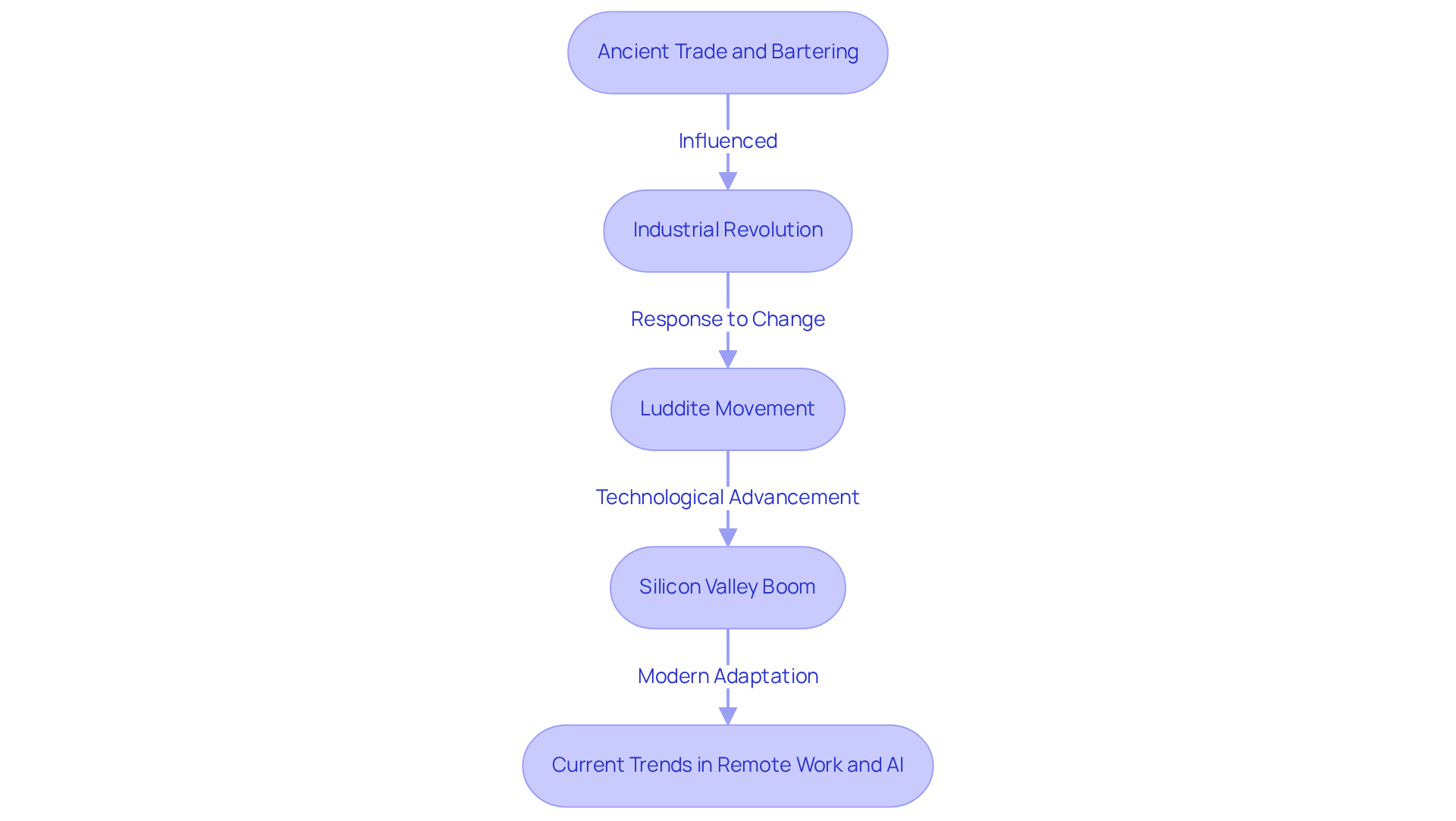
The base of modern economic practices originated from ancient trade activities through bartering practices. The Industrial Revolution established itself as a transformative period which brought substantial changes to entrepreneurial operations. The historical period transformed agricultural production into industrial facilities which led to the development of new business strategies and innovative products. The historical Luddite movement revealed how technological advancement created new job opportunities even though workers initially opposed changes through their resistance.
The late twentieth century saw a technology-driven startup boom in Silicon Valley which established itself as the digital entrepreneurship hub. The technological advancements led to the internet's creation which allowed businesses to enter global markets while developing new solutions. The U.S. business sector achieved its peak in 2022 according to recent statistics which showed significant growth among female entrepreneurs and younger business leaders.
Business owners in present-day entrepreneurship operate through remote work and the gig economy and artificial intelligence integration. Research indicates that 70% of innovators implement socially responsible business practices which demonstrates rising awareness about their environmental and social responsibility duties. Entrepreneurship proves its enduring strength by adapting to technological advancements and social changes which fulfill the needs of an evolving world.
Entrepreneurs need to use market insights from Ubertrends to stay competitive in the current complex business environment where Amazon and traditional retail fight intensely. Traditional retailers needed to develop new business strategies which combined online and offline customer interactions because e-commerce forced them to adapt their models. The evolution shows changing customer preferences while demonstrating the need for entrepreneurs to stay adaptable in their business strategies. The entrepreneurial landscape transforms because AI enables operational streamlining and delivers exceptional customer experiences.
Key Characteristics of Contemporary Entrepreneurship Trends
Modern entrepreneurship demonstrates various key characteristics which define its contemporary trends.
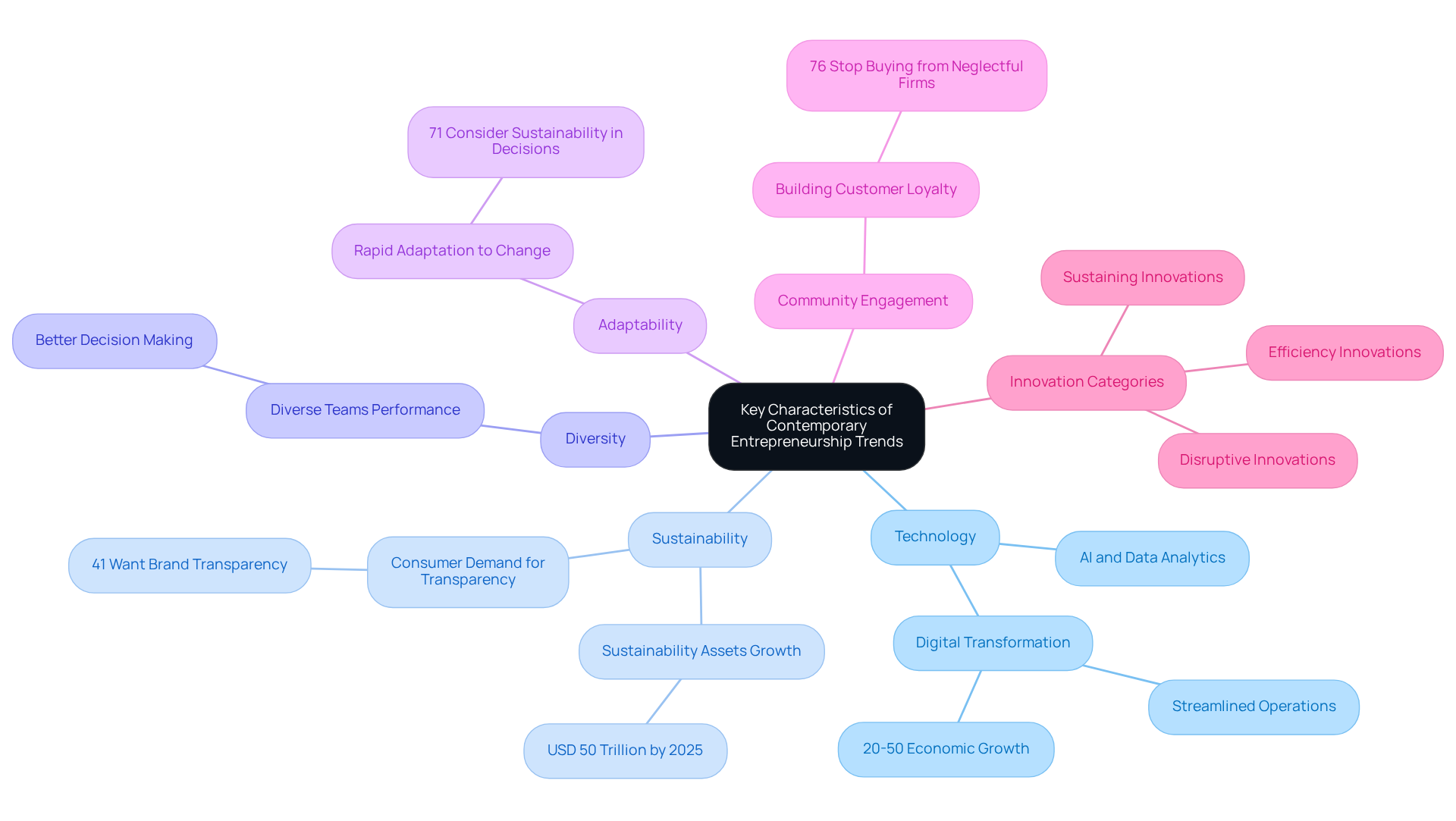
Modern business operations require entrepreneurs who utilize AI together with data analytics to enhance operational performance while building stronger customer relationships. The Digital Lifestyle transforms organizational operations because technology acts as a fundamental element for both identity formation and interaction. Digital transformation investments made by companies drive 20-50% economic growth through customer experience enhancement because technology plays an essential role in current business operations. Business founders need to adapt quickly to the fast-paced business environment because generative AI growth reduces innovation market introduction times significantly.
The world's startups and businesses have established sustainability as their top priority by offering environmentally friendly products and services. The value of sustainability assets will reach USD 50 trillion by 2025 because consumers actively seek out environmentally friendly purchasing options. Research shows that asset managers strongly support sustainable investing since 85% of them share this viewpoint. Sustainability has evolved into both an ethical duty and a profitable business advantage.
Modern entrepreneurs recognize the necessity of diverse teams since different perspectives lead to innovative solutions. Organizations with diverse employee mixes demonstrate better performance than their competitors because diverse teams produce better decisions along with innovative solutions.
Organizations need to maintain rapid adaptability to respond effectively to changes in their operational environment. Business leaders must modify their investment models because 71% of them select choices that include sustainability factors for their decision-making processes. Business owners require flexibility because they need to respond to market changes and shifting consumer tastes.
Organizations need to establish deep connections with their local communities. The business practice of community engagement has become vital because it creates loyal customers while strengthening brand image. The majority of consumers (76%) will end their relationship with companies that neglect to protect environmental and employee conditions and community welfare.
These patterns demonstrate that entrepreneurship has undergone a fundamental change because technology alongside sustainability represent fundamental elements for modern business success. Leaders who aim to succeed in changing business conditions must understand the three innovation categories of efficiency and sustaining and disruptive because these categories guide their strategic decisions between innovation and social responsibility.
Examples of Current Entrepreneurship Trends in Action
The following entrepreneurs demonstrate modern business trends through their actions:
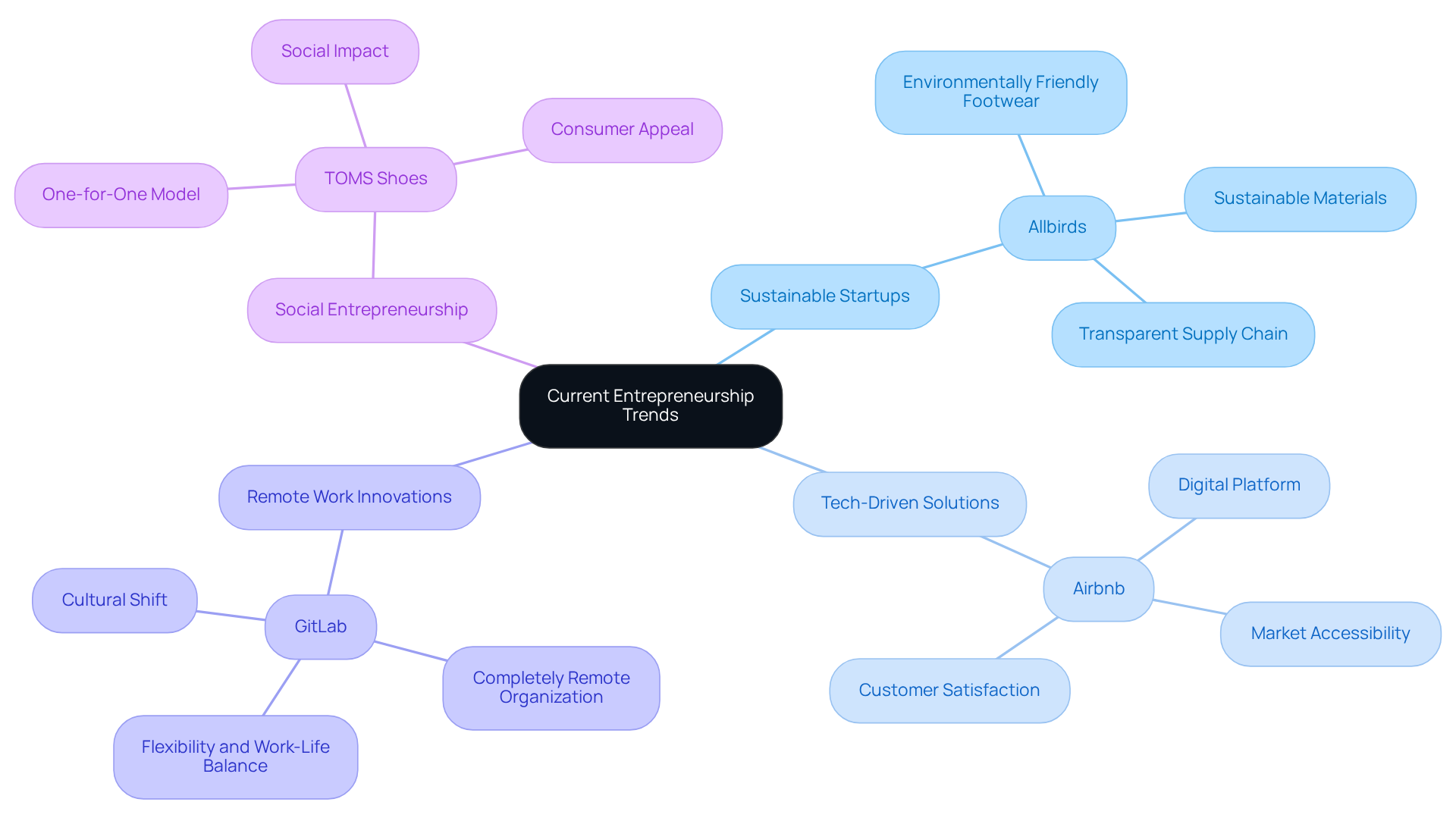
- Sustainable Startups: The sustainable footwear industry leader Allbirds creates environmentally friendly footwear products. The company attracts customers who value environmental responsibility through its sustainable materials and transparent supply chain operations. The market demonstrates growing interest in sustainable products because 83% of consumers expect companies to actively develop ESG best practices.
- Tech-Driven Solutions: Through its technological platform, Airbnb transformed the hospitality industry by uniting hosts with travelers. The example demonstrates how digital platforms can develop new business models. The platform has achieved both market accessibility and customer satisfaction improvements while establishing itself as a dominant force in global accommodation.
- Remote Work Innovations: The completely remote organization GitLab demonstrates that companies can thrive without maintaining a physical office space. This example demonstrates how flexibility and work-life balance have become essential elements. The remote work model has become the standard for employees because it represents a broader cultural shift to merge work with personal life.
- Social Entrepreneurship: The operational model of TOMS Shoes delivers social impact through its business practice of donating one pair of shoes for each pair customers buy. The trend demonstrates that businesses are dedicating more attention to social responsibility within their operational frameworks. Consumers find this approach appealing because 88% of them expect businesses to help them generate social impact.
Entrepreneurs employ present business trends to create innovative solutions which will direct future business development through sustainable and technological approaches.
Conclusion
Modern entrepreneurship experiences fundamental changes because of technological advancement combined with increasing social responsibility. The modern entrepreneur operates in a business environment that combines digital platforms and e-commerce to transform established business models for global market access. Business leaders need to unite ethical practices with competitive market strategies because sustainability and social impact have become essential expectations from consumers.
The article shows entrepreneurs must sustain ongoing innovation and adaptability. Social entrepreneurship alongside artificial intelligence in business operations leads to profitable ventures which serve a purpose. The evolution shows how education combined with diverse teams remains essential for developing innovative solutions because past movements and technological revolutions established the base for modern entrepreneurial environments.
Organizations must maintain adaptability while developing robust community relationships to achieve enduring success according to current entrepreneurial trends. Entrepreneurs must embed sustainability alongside ethical practices into their fundamental business strategies because consumers now base their purchasing decisions on these values. Their dedication to these values helps them meet market demands while creating beneficial social effects which proves that contemporary entrepreneurship goes beyond financial gains to create meaningful global change.