June 16, 2026
Plaud Says AI Notetakers Topped $100 Million
Plaud says it shipped more than 2 million AI notetakers and passed $100 million in annualized subscription revenue.
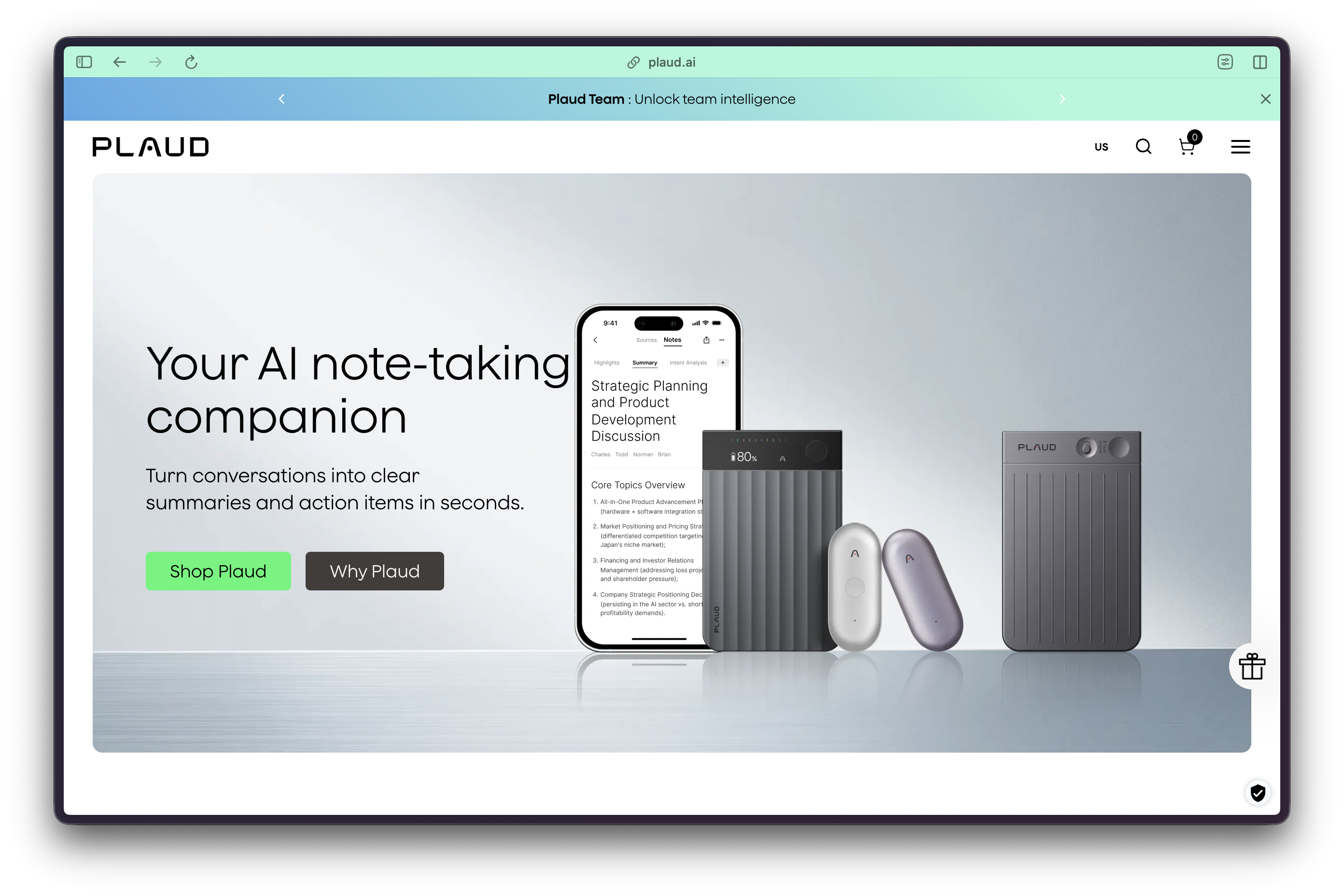
AI hardware has produced plenty of spectacle and few durable businesses. Plaud found a less glamorous opening: meetings people already attend and notes they already hate taking.
The company says it has shipped more than 2 million notetaking devices and passed $100 million in annualized subscription revenue, according to TechCrunch.
Those are company-reported figures, and annualized revenue run rate is not audited annual revenue. They still mark a striking result for a young hardware category.
Post-Screen AI
Plaud sells small recorders designed for conversations. Some attach to a phone; others can be worn. The device captures audio, while the subscription converts it into transcripts, summaries, and action items.
The approach gives AI access to a part of work that remains stubbornly analog. Decisions happen in conference rooms, interviews, medical visits, sales calls, and hallway conversations long before they reach a document.
A dedicated recorder also removes friction. The user does not need to open a laptop, position a phone, or invite a meeting bot into every call.
Hardware Funnel
Plaud’s business model begins with a device and expands through software. Buyers receive a limited amount of transcription, then pay for higher usage and additional features.
CEO Nathan Xu told TechCrunch that nearly half of device owners upgrade from the basic plan to a pro or unlimited tier. Plaud does not yet sell the software by itself, so hardware ownership feeds the subscription business.
That relationship explains the $100 million claim. The recorder establishes a place in the workflow; recurring transcription turns each device into a revenue channel.
Competition is growing. Anker, Viaim, Vibe, Pocket, meeting bots, phone apps, and operating-system features all chase the same memory problem. Plaud must defend the convenience and quality of its dedicated hardware as general-purpose devices improve.
Memory Layer
The strongest signal is behavioral. Professionals will carry another object if it reliably captures decisions they would otherwise forget.
Plaud is selling memory as a service: record the room, retrieve the important parts, and push the work forward. Two million devices suggest that post-screen AI may begin with a very small screenless tool.