July 1, 2026
How AI Could Change the Way Doctors Think
AI scribes can cut paperwork, but outsourcing clinical notes may weaken a habit doctors use to organize evidence and sharpen judgment.
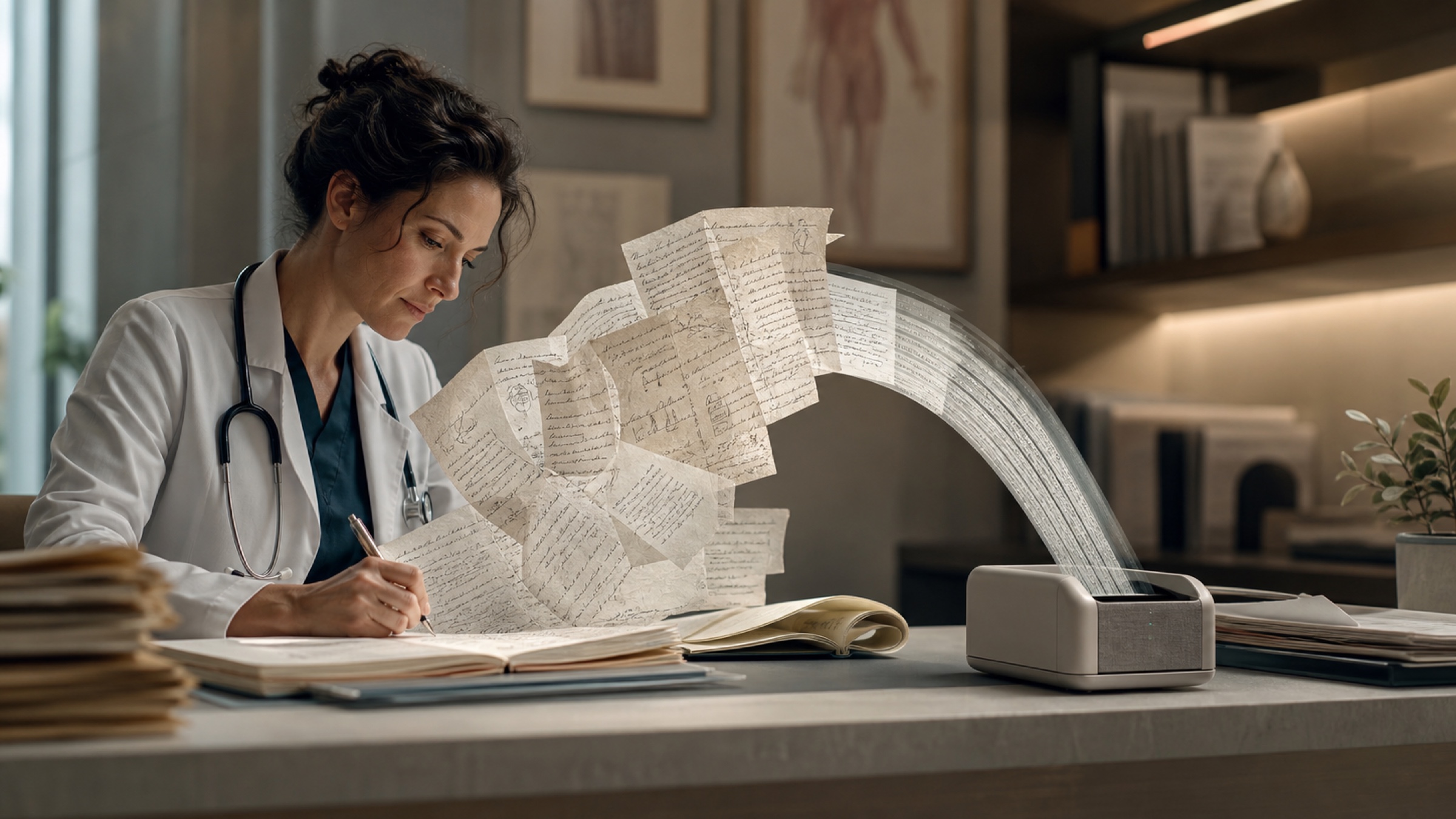
Doctors hate paperwork for good reason. Clinical notes consume time that could be spent with patients, follow physicians home, and turn medical care into an endurance test of typing and templates.
AI scribes promise relief. They listen during an appointment, transcribe the conversation, and assemble a draft note for the physician to review. The immediate gain is obvious: less clerical work and more eye contact.
The tradeoff sits inside the note itself. Writing a clinical account forces a doctor to select evidence, order competing explanations, and decide what deserves attention. Remove too much of that work and medicine may lose a thinking ritual along with an administrative burden.
Notes as Reasoning
A clinical note is a compressed argument. Symptoms, test results, medical history, uncertainty, and a treatment plan must fit into one coherent record. The act of writing exposes gaps. A symptom that seemed minor during conversation may become important when the case is reconstructed on the page.
The New York Times Magazine examined the tension through physicians using ambient AI documentation. The technology can make appointments feel more human, yet the reporting also asks what happens when software performs part of the synthesis that doctors once had to do themselves.
Medical training has long depended on repetition: take a history, examine the patient, build a differential diagnosis, document the reasoning, and defend the plan. An AI-generated first draft changes that sequence. The physician becomes an editor of a proposed account.
Editing can still demand judgment. It can also encourage acceptance, especially during a packed day when the generated note looks plausible and the next patient is waiting.
Better Visits
The case for AI scribes remains strong. Patients notice when a doctor spends the visit facing a screen. Physicians face burnout from documentation requirements that expanded far beyond the concise notes of earlier eras. A tool that returns attention to the room could improve the encounter for both sides.
Hospitals should judge AI-written notes by the physician’s command of the evidence, corrections to the record, and ownership of the reasoning behind the plan.
Hospitals will need to watch more than time saved. Error rates, correction patterns, diagnostic changes, training outcomes, and physician reliance all belong on the scoreboard. Junior doctors deserve special attention because habits formed during training can last an entire career.
Cognitive Handoff
Medicine is full of useful delegation. Labs measure, scanners reveal, and software flags interactions. Clinical judgment still depends on knowing when a convenient output is incomplete or wrong.
AI scribes may become standard equipment. Their success should be measured by the quality of the thinking they leave behind.